Restart, shut down, and wake iQ 4 devices
You can restart, shut down, and wake devices from SMART Remote Management. This is useful when you are troubleshooting issues with device users and when you are installing apps on devices and need to wake and restart (or shut down) those devices as part of the installation.
You can perform these actions on a single device, all devices that match a saved filter’s criteria, or a group. Alternatively, you can:
Use a trigger to initiate the action at a scheduled time or when a specific event takes place.
Include the action in workflows.
SeeCreate workflows
 Restart devices
Click Devices
 to open the Devices view.
Choose one of the following options:
Option
Steps
Restart a single device
Click the device’s row.
The device’s dashboard window appears.
Click Power, and then click Restart.
Click Yes.
Restart devices that match a saved filter
Click Filters
 to open the filters panel and then click Browse saved.
Click Actions
 in the saved filter’s row and select Power
 Restart.
Click Yes.
Restart all devices in a group
If the groups panel isn’t visible, click
 Groups.
Click Actions
in the group’s row and select PowerRestart.Click Yes.
Shut down devicesClick Devices
to open the Devices view.Choose one of the following options:
Option
Steps
Shut down a single device
Click the device’s row.
The device’s dashboard window appears.
Click Power, and then click Shutdown.
Click Yes.
Shut down devices that match a saved filter
Click Filters
to open the filters panel and then click Browse saved.Click Actions
in the saved filter’s row and select PowerShut Down.Click Yes.
Shut down all devices in a group
If the groups panel isn’t visible, click
Groups.Click Actions
in the group’s row and select PowerShut Down.Click Yes.
Wake devicesUsing SMART Remote Management, you can make a source device wake target devices if those target devices support Wake on LAN (WOL):
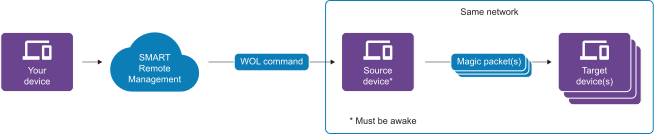
You can choose a single source device, all source devices that match a saved filter’s criteria, or a group. If you choose a group, SMART Remote Management determines which source device to send the WOL command from based on criteria such as availability, performance, and priority.
Note
SMART Remote Management does not support waking devices using Wake on Wireless LAN (WoWLAN) commands.
Tip
It’s better to choose multiple source devices or a group than choose a single source device because the single source device might not be awake when you send the WOL command.
The WOL command that SMART Remote Management sends to the source device includes the target devices’ MAC addresses. The source device generates and sends a magic packet for each target device. A magic packet is a special signal that contains the MAC address of the target device and is sent as a broadcast frame over the network, meaning it reaches all the devices on the network. Only the device with the matching MAC address in the magic packet responds and wakes up.
Notes
Make sure target devices support WOL before completing the following procedures, and that the WOL feature is enabled on those devices.
The source device that sends the magic packets must be awake and on the same network as the target devices you’re waking.
You can view WOL commands in the Command History view to determine if they have succeeded, are pending, or failed.
To choose source devices for a WOL command
Click Devices
to open the Devices view.Choose one of the following options:
Option
Steps
Choose a single source
Click the device’s row.
The device’s dashboard window appears.
Click Power, and then click Wake On Lan.
The Wake on lan window appears.
Select Device and type a target device’s ID in the Device ID box.
Choose multiple source devices that match a saved filter
Click Filters
to open the filters panel and then click Browse saved.Click Actions
in the saved filter’s row and select PowerWake On LAN.Select Filter and select a saved filter from the drop-down list.
Choose multiples sources devices in a group
If the groups panel isn’t visible, click
Groups.Click Actions
in the group’s row and select PowerWake On LAN.Select Group and select a group from the drop-down list.
OptionalTurn on Advanced wake-on-lan settings and specify the broadcast address and port for execution if your network requires this information.
Click Confirm.